
Loading...
Serving Ocala, FL and surrounding areas. (352) 657-1606
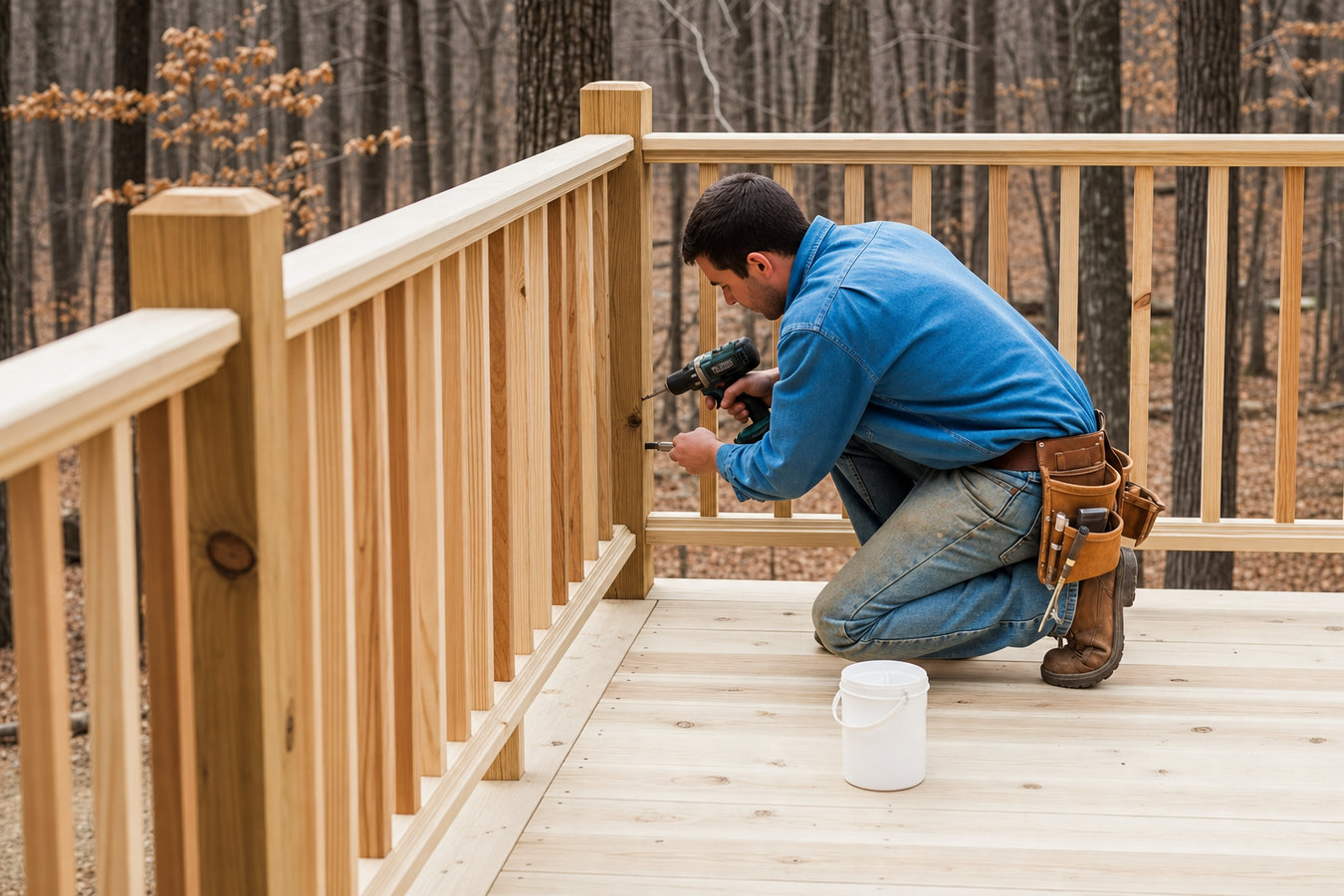
Wobbly posts, rotted wood, and wide baluster gaps are more than cosmetic problems. We install deck railings in Ocala that are anchored into the framing, pass Marion County inspection, and hold up through Florida summers without constant upkeep.
Deck railing installation in Ocala means selecting a material - aluminum, vinyl, wood, or cable - that holds up in Central Florida's heat and humidity, anchoring posts into the deck framing rather than just the surface boards, and installing balusters to the spacing Florida code requires; most residential jobs take one to two days once a Marion County permit is in hand, with permit processing adding a few days to a week beforehand.
Florida building code requires railings on any deck surface that sits 30 inches or more above the ground - this is not optional, and an inspector will check both the height of the rail and the spacing of the balusters before signing off. If your deck was built more than fifteen years ago, the spacing between the vertical balusters may not meet current standards. If posts wobble when you push them or show soft wood at the base, those are safety issues that will come up in a home inspection during any future sale. Replacing railings on a sound deck is a straightforward standalone project - you do not need to rebuild the entire deck to get safe, code-compliant custom deck railings installed.
Marion County averages over 50 inches of rain per year, and that kind of moisture exposure accelerates wear on materials that are not matched to the climate. A contractor who works regularly in Ocala will steer you toward materials that hold up here without constant maintenance - and explain the tradeoffs honestly before you commit.
Grab the top rail and push firmly in different directions. If any post moves or the whole section sways, the railing is no longer doing its job. A wobbly railing is a fall hazard - especially for children and older adults - and it will only get worse over time as Florida's wet seasons continue to work on the connections.
In Ocala's wet summers, wood posts that sit close to the deck surface are the first place rot sets in. Press your thumb firmly against the base of each post - if the wood gives or feels spongy, rot has already started. This is a sign the posts need to be replaced before the whole railing becomes unsafe.
Look at the spacing between the vertical pieces running between your top and bottom rails. If the gaps appear wide - wider than about four inches - they may not meet current safety requirements. This is worth checking on any deck built more than fifteen years ago, before stricter spacing rules were common in Florida.
In Ocala's humid climate, metal railings that were not properly coated will start to rust at the joints and fasteners. Surface rust is cosmetic at first, but it moves quickly into the structural connections in Florida's heat. If you see orange streaks on your deck boards below the railing, it is time for an evaluation.
We install aluminum, vinyl, pressure-treated wood, and cable railing systems on new deck builds and as standalone replacements on existing decks. Every installation starts with the posts - anchored into the deck framing, not just surface-mounted to the top boards - because post anchoring is what determines whether the railing stays solid over time and passes inspection. If your deck needs a deck repair or partial replacement before new railings can be properly anchored, we assess that during the estimate visit and give you an honest answer about what the framing will support.
Aluminum and vinyl are the most practical choices for Ocala homeowners who want railings that hold up in Central Florida's heat and humidity without annual sealing or repainting. Wood is an option for homeowners who prefer its look, with the understanding that it needs regular maintenance in this climate. Cable railing systems give you an open sightline to the yard - useful if your deck overlooks a pool or a view - at a higher upfront cost. For homeowners on multi-level decks with multiple tiers, we coordinate railing heights and styles across all levels so the finished project looks consistent and meets code at every elevation.
Suits homeowners who want a low-maintenance option that does not rust or rot in Ocala's humidity and requires no repainting over time.
Suits homeowners who want a clean, traditional look with no maintenance concerns - vinyl holds up well against moisture, UV, and Florida's termite pressure.
Suits homeowners who prefer the natural look of wood and are willing to seal or stain it on a regular maintenance schedule to extend its life in this climate.
Suits homeowners who want an open, unobstructed view from the deck - popular on pool decks and elevated platforms - and are comfortable with the higher upfront cost.
Marion County averages over 50 inches of rain per year, and summer humidity rarely drops below 70 percent. Wood railings that are not sealed and maintained properly can begin to rot or warp within just a few seasons here - which is why many Ocala contractors steer homeowners toward aluminum or vinyl as a first choice. Central Florida is also one of the most active termite regions in the country. Subterranean termites are common in Marion County and are attracted to wood that stays damp - which describes the base of deck posts after a Florida summer rain. Many Ocala homeowners choose aluminum, vinyl, or composite railings specifically to eliminate termite risk entirely. Homeowners in Belleview and the surrounding Marion County area face the same moisture and termite conditions that shape material choices here.
Ocala's large number of planned communities adds a layer to most railing projects. Neighborhoods like On Top of the World, Stone Creek, and Fore Ranch have active HOA architectural review processes, and some specifically restrict cable railings or require railings to match the home's exterior finish. A contractor who works regularly in these communities will ask about your HOA before drawing up a quote and help you find a style that the review board will approve. The Ocala metro area also has one of the highest concentrations of residents over 65 in Florida - many homeowners here prioritize railing grip and stability not just for code compliance, but because it genuinely matters for day-to-day safety. Homeowners in The Villages area have similar priorities. For current Florida railing requirements, the Florida Building Commission publishes the residential building code online, and the North American Deck and Railing Association maintains industry installation standards for railing systems.
We ask a few basic questions about the size of your deck, what your current railing looks like, and whether you have any material preferences. Most people hear back within one business day. You do not need to know all the answers - we help you figure out the details during the estimate visit.
We come to your home to measure the deck perimeter, check the condition of the existing framing, and talk through your material options in person. This visit usually takes 30 to 60 minutes. You leave with a written quote that covers materials, labor, permit fees, and haul-away - no surprises when the invoice arrives.
For most new railing installations or replacements tied to structural changes, we apply for a building permit through Marion County before work begins. We handle the application - you just need to be aware it adds a few days to the timeline before we can schedule the installation date.
The crew removes old railings if needed, sets and anchors the new posts, attaches the rails, and installs the balusters. Most standard residential jobs finish in one day. A Marion County inspector then verifies the railing meets code, and we walk you through the completed work before we leave.
Free written estimate, no pressure. We handle the Marion County permit and inspection process from start to finish.
The most common railing failure starts with posts that are surface-mounted to the top of the decking rather than bolted through into the framing below. We anchor every post into the structural framing so the railing stays solid under real-world load - and so it passes the inspector's push test. A post that wobbles fails inspection and creates genuine fall risk.
Marion County gets over 50 inches of rain per year, and summer humidity rarely drops below 70 percent. We recommend materials that hold up in those conditions without annual sealing or repainting - aluminum and vinyl as a baseline, with honest guidance on what wood requires in this climate. The goal is a railing that looks good and stays solid five years from now, not just on the day it is installed.
Every railing installation that requires a permit gets one - no exceptions and no suggestions to skip the process. A passed Marion County inspection gives you documented proof the work meets code, which protects your home's value and prevents a railing deficiency from showing up on a home inspection report when you sell.
Ocala has dozens of planned communities where the architectural review board has specific rules about railing styles, materials, and finishes. We ask about your HOA at the first conversation and help you choose a style the review board will approve - so you are not redoing the work after the fact. Communities like On Top of the World and Stone Creek are familiar ground for us.
Safe railings in Ocala require the right post anchoring, the right materials for the climate, and a permit process that gives you an independent confirmation the work was done correctly. Those three things together are what we deliver on every railing project in Marion County, from deck railings to porch railing replacements.
Planning a new deck from scratch means choosing materials, layout, and railing style together - so everything works as a single system from day one.
Learn MoreIf the framing or decking surface under your railings has deteriorated, addressing the structural issues first ensures new posts have something solid to anchor into.
Learn MoreMarion County permit slots book out during the busy season - reach out now and we will get your project on the calendar before the summer rain season hits. Call or request a free written estimate today.