
Loading...
Serving Ocala, FL and surrounding areas. (352) 657-1606
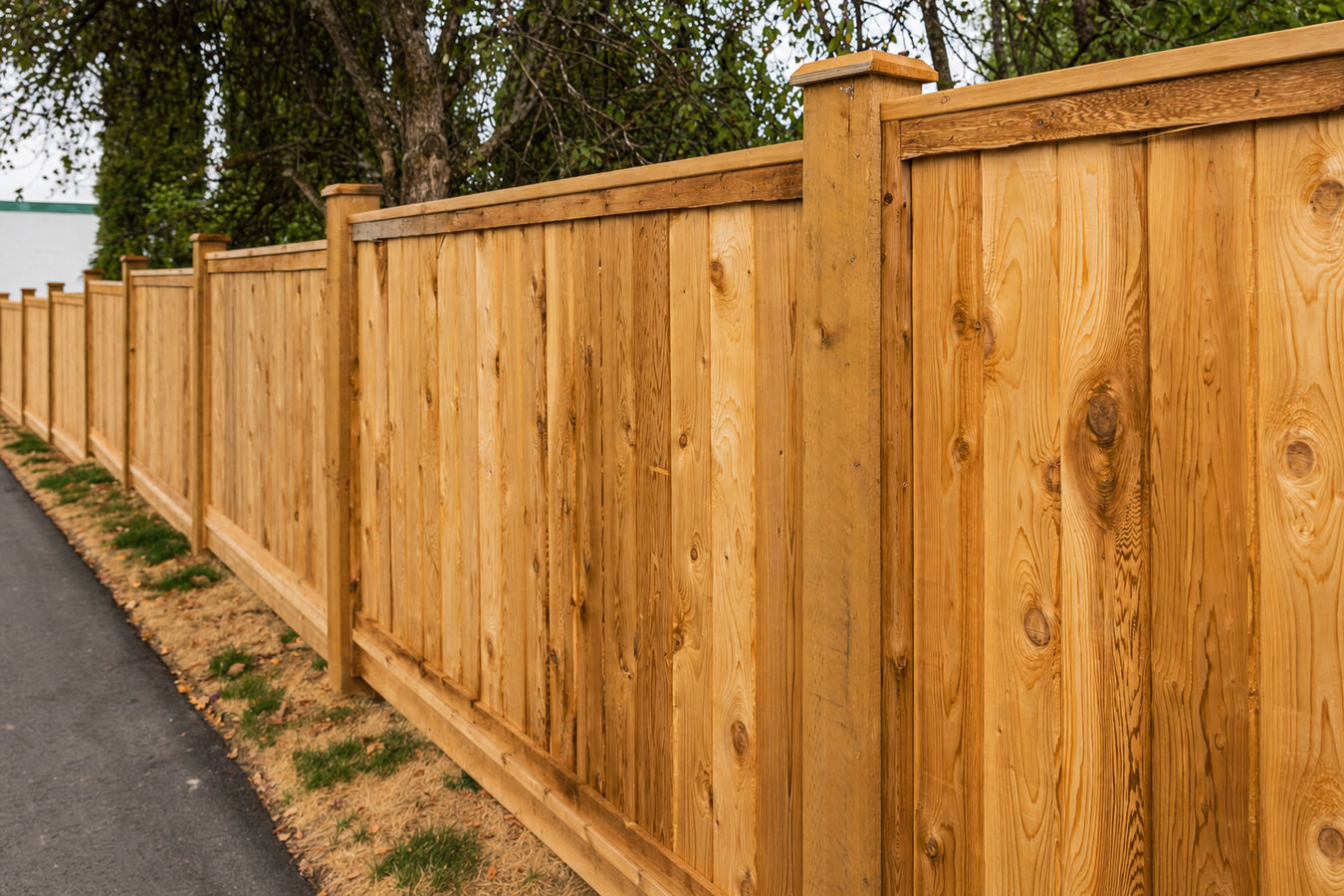
An open yard limits how much you can enjoy it. We build wood privacy fences with the right lumber and post depth for Ocala's climate so your yard stays private and your fence stays standing.
Wood and privacy fence installation in Ocala means setting posts deep in concrete for Marion County's sandy soil, attaching rails and boards with rust-resistant hardware, and pulling the required permit through the City of Ocala - most standard backyard jobs are complete in one to two days once the crew is on site.
A lot of Ocala homeowners have a perfectly good patio or backyard that they barely use because the yard feels too open or too visible from the street. A six-foot privacy fence changes that immediately. It also solves practical problems: keeping pets contained, meeting Florida's pool barrier requirements, and establishing a clear property line with neighboring homes. In Ocala's newer subdivisions, where homes are built close together and the original landscaping has not grown in enough to provide real screening, a fence is often the fastest way to get the yard you actually want.
The details that separate a fence that lasts 15 years from one that needs replacing in 7 are mostly invisible to the eye on installation day - post depth, wood species, hardware grade, and sealant. Those choices matter more in Florida's climate than in most other parts of the country. If you are weighing wood against a lower-maintenance option, our vinyl fence installation page covers that comparison in detail.
If you can push on a post and feel it shift, or if panels are visibly out of plumb, the structure is failing. In Ocala's sandy soil, this deterioration tends to accelerate once it starts - a few problem posts today often means structural failure across the whole fence within a season or two.
If you notice small mud tubes running up the base of your fence posts, or if the wood at ground level feels hollow or crumbles when pressed, subterranean termites may have already compromised the structure. Marion County has significant termite activity, and once posts are infested, full replacement with properly treated lumber is usually the right call.
Florida law requires a barrier around residential swimming pools, and a privacy fence is one of the most common ways homeowners meet that requirement. Even without a pool, if you have pets or small children and your yard is open, a fence is the most reliable way to keep them safely contained - especially in neighborhoods near busy roads.
If you avoid spending time on your patio or in your yard because you feel visible from the street or neighboring properties, a privacy fence solves that directly. This is especially common in Ocala's newer subdivisions where homes are built close together and yards have little natural screening from existing landscaping.
The two wood species that hold up reliably in Florida's climate are pressure-treated pine and cedar. Pressure-treated pine is the more common choice - it handles moisture and insects well when maintained, and it costs less upfront than cedar. For every post we set in the ground, we use lumber rated for ground contact, not just above-ground use, because the difference in durability in Marion County's soil and termite environment is significant. Cedar costs more but naturally resists rot and tends to look more refined without as much maintenance over the years. Both species can be stained or sealed to extend their life in Ocala's rainy season - we advise on the right products at the time of installation so you are not guessing later.
All wood fence projects include posts anchored in concrete at the depth Ocala's sandy soil requires, rust-resistant hardware throughout, and full permit processing through the City of Ocala. We also offer removal and disposal of existing fencing as part of the project scope - confirm at the estimate stage if you have old fencing that needs to come down first. If you are considering a screened enclosure to go alongside your new fence, screened-in porches and screened decks pair naturally with privacy fencing for homeowners who want full outdoor coverage.
Suits homeowners who want full enclosure at a lower upfront cost and are comfortable with periodic sealing to maintain the wood over time.
Suits homeowners who want a more refined natural look with better inherent rot resistance and less frequent maintenance requirements.
Suits homeowners who want maximum privacy with overlapping boards that eliminate gaps even as the wood moves slightly with humidity changes.
Suits homeowners installing or replacing a compliant barrier around a residential pool to meet Florida's residential pool safety requirements.
Ocala averages over 50 inches of rain per year, and summer brings near-daily afternoon thunderstorms from June through September. That constant wet-dry cycle is hard on wood that was not sealed properly at installation, and it accelerates rot at post bases faster than in drier climates. Combine that with Marion County's position as a high-termite-activity zone - subterranean termites are common throughout the area and actively target wood that sits in direct ground contact - and the choice of materials and post treatment becomes a meaningful long-term decision, not just a budget line item. The University of Florida IFAS Extension publishes research on wood durability and pest pressure specific to this region that backs up what experienced local contractors already know from years of working here. Homeowners in Marion Oaks and throughout Marion County face the same soil and pest conditions and should ask contractors specifically about ground-contact lumber ratings before any agreement is signed.
HOA requirements add another layer of planning for many Ocala homeowners. Large planned communities like On Top of the World, Fore Ranch, and Stone Creek each have their own rules about fence height, style, and board direction - and their approval process runs separately from the city permit, so both need to be in place before work begins. We handle the city permit for every job and walk through HOA requirements at the estimate visit so there are no surprises. Homeowners in Belleview and surrounding southern Marion County neighborhoods often have fewer HOA restrictions but still require the standard Marion County permit process for new fence installations.
We walk your property line, take measurements, ask about gate locations, and discuss your goals - privacy, pet containment, pool barrier, or property boundary. You receive a written quote that breaks out materials, labor, permit fees, and any removal of existing fencing. We respond to all requests within one business day.
We submit the permit application to the City of Ocala on your behalf, including the site plan showing fence placement relative to your property lines. If your neighborhood has an HOA, we review their guidelines with you at the estimate stage so you know what to submit and when. Permit approval typically takes one to two weeks.
The crew marks post locations along the fence line and digs holes deeper than standard, given Ocala's sandy soil. Posts go into concrete footings and the crew attaches rails and boards once the footings have cured. Most standard backyard fences are complete in one full day, with larger projects or multiple gates sometimes running into a second day.
Before the crew leaves, we walk the finished fence together. Gates should latch cleanly, boards should be plumb, and post bases should be solid. We also advise on the right sealant or stain for your wood species and how often to reapply in Ocala's climate - a quick follow-up inspection each spring catches small problems before they become expensive ones.
We use ground-contact-rated lumber, handle your permit, and set posts to the depth Ocala's sandy soil actually requires. Written quote, no obligation.
Every post we set in the ground uses lumber rated specifically for direct soil contact in high-moisture, high-insect environments. Marion County sits in a high-termite-activity zone, and using above-ground-rated lumber for in-ground posts is one of the most common reasons fences fail early in this area.
We apply for your City of Ocala permit as part of every project - it is not an optional add-on. A fully permitted fence means a licensed inspector reviews the work before closeout, protecting you from fines and giving you documented proof of compliant installation if you ever sell your home.
We set posts deeper and use more concrete per footing than national installation guides recommend, because Marion County's sandy soil demands it. That extra depth is what keeps posts plumb after Ocala's summer rainy season saturates the ground repeatedly for four months straight.
Some fences need repair, not replacement. Others are past the point where repair makes sense. We give you a straight answer on which situation you are in at the estimate visit - not a pitch for the most expensive option. The American Fence Association recommends getting multiple written quotes and comparing scope, not just price.
The contractors who cut corners on post depth, lumber grade, and permits are easy to spot in hindsight - their work shows up in the form of leaning fences, rotting posts, and HOA violation letters within a year or two. We have fixed enough of those jobs to know exactly what to avoid from the start.
For research-backed guidance on wood durability and pest pressure specific to North Central Florida, the University of Florida IFAS Extension publishes resources on wood species performance and termite risk in this climate. The American Fence Association offers homeowner guidance on vetting contractors and understanding installation standards.
Screened enclosures that complement privacy fencing by closing off the top of your outdoor space and keeping insects out year-round.
Learn MorePVC fencing for homeowners who want privacy and containment without the maintenance requirements of natural wood in Florida's climate.
Learn MorePermit season fills up fast - reach out now to lock in your start date before the summer rainy season arrives and scheduling gets tight.